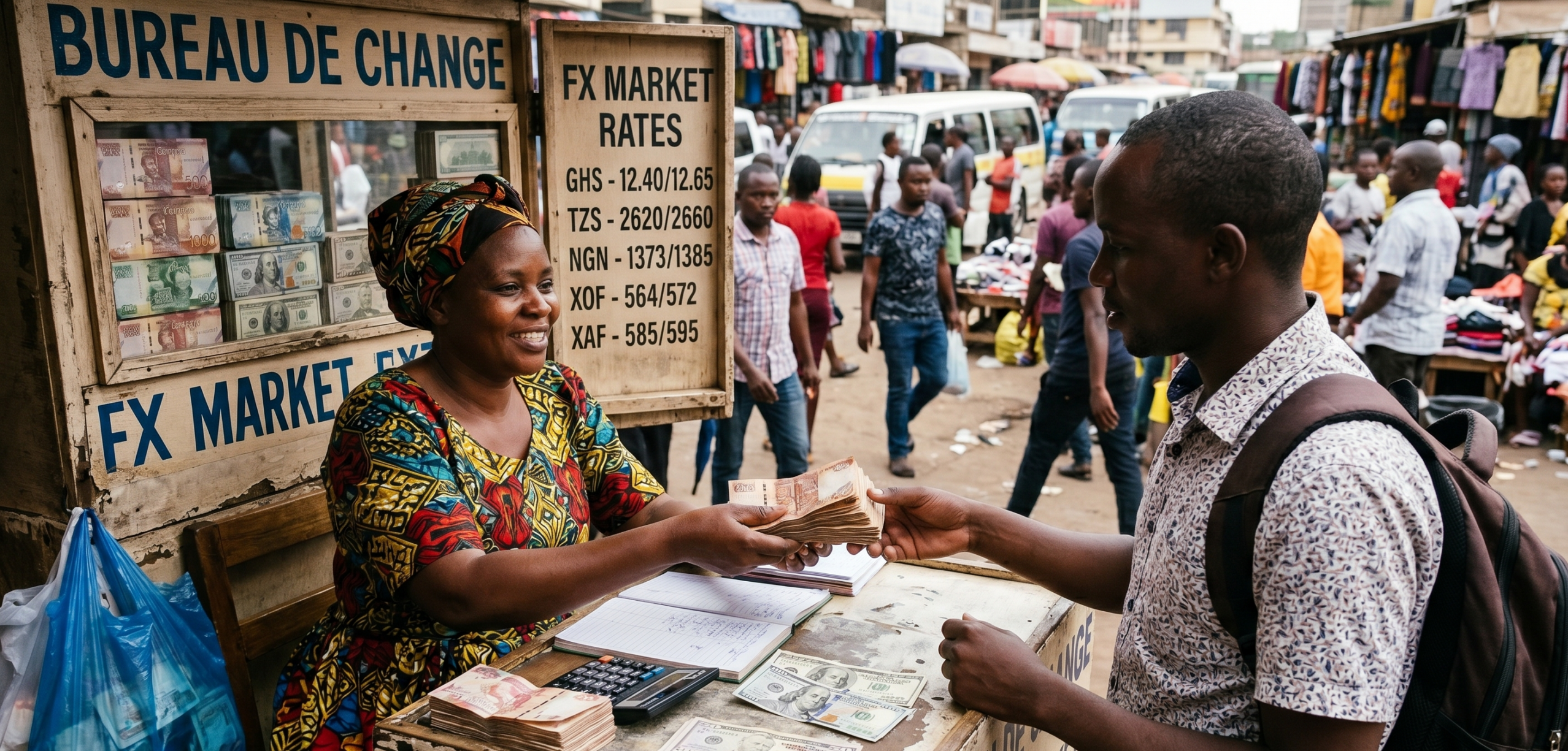
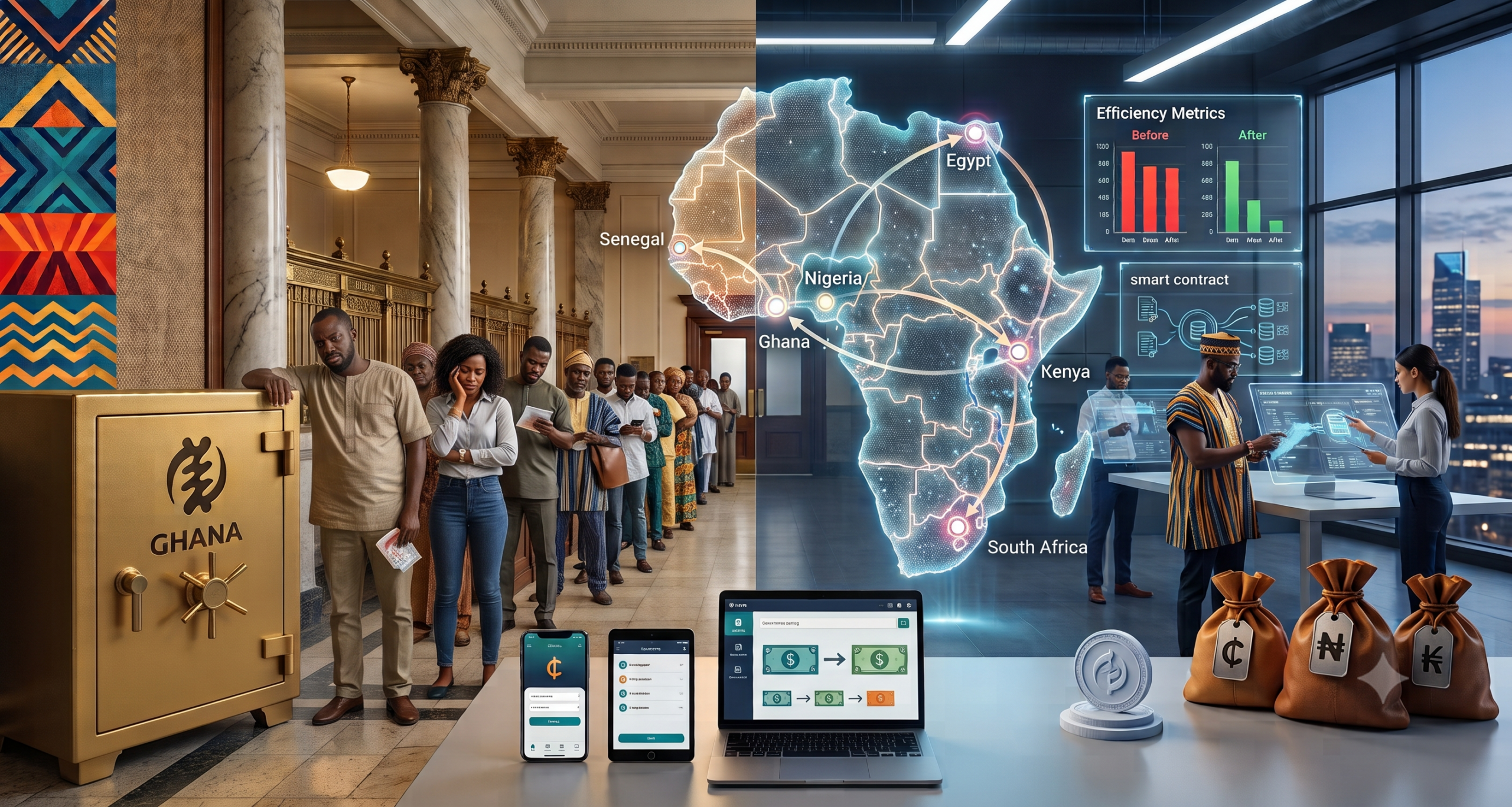


If you run treasury for a company that does business in more than one African country, you know the problem well. Money doesn’t move the way it should. It gets stuck. Profit builds up in one country while a bill comes due in another, and there’s no easy way to get cash from one place to the other.
That gap is where a lot of hidden costs live.
Where the Hidden Costs Really Come From
Moving major currencies like the US dollar or the euro is fast and cheap. Banks handle huge volumes of these currencies every day, so the fees stay low.
African currencies are a different story. Two things go wrong at once.
First, the price. There’s no active market trading Ghanaian Cedis directly against CFA Francs, so the conversion is executed in two legs – and in the banking system, each leg is quoted by a different institution with no real interest in African currencies, each adding its own wide spread. Nobody quotes you one honest price for the whole journey.
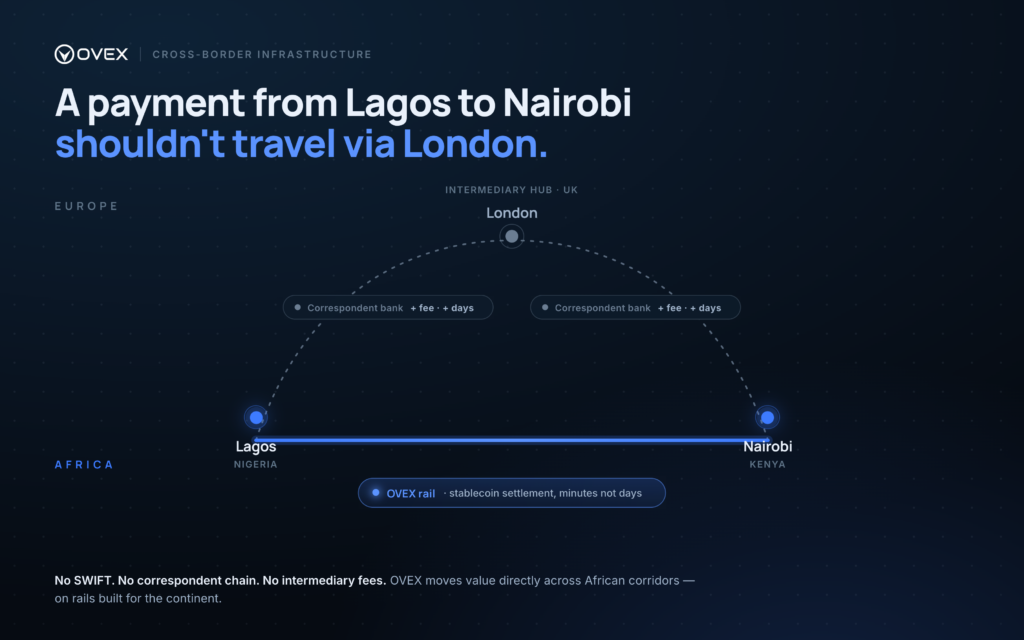
Second, the route. Banks in different African countries rarely hold accounts with each other, so the payment physically travels through intermediary banks in New York or London just to move between two neighbouring countries. Each intermediary takes a fee, runs its own checks, and adds a day. What should take minutes ends up taking days and costs far more than it should.
This shows up as real cost in four ways:
- Fees pile up. The payment is taxed twice: once on the price, because a two-leg conversion quoted by disinterested banks means paying two wide spreads instead of one fair one, and once on the route, because every intermediary bank takes its own fee along the way.
- Payments are slow. Every extra bank in the chain adds delay, which puts pressure on paying suppliers and staff on time.
- Money sits idle. Because moving money is slow and expensive, profit earned in one country ends up parked there instead of funding work somewhere else or reaching headquarters.
- It’s a mess to manage. A different bank and a different set of paperwork for every country, with no easy way to see the full picture of where all the money sits.
It’s not that African currencies are hard to move, it’s that the world’s payment system was never built to move them.
A Faster, Simpler Way to Move Money
The fix is one provider running the whole journey: collecting locally, converting at a single all-in rate quoted upfront, and paying out locally with both ends of the trade handled in-house. No handoffs between banks, no fees stacking up mid-route, no unnecessary delays.
Here’s what that looks like in practice. Say a company collects retail sales revenue in Ghana and needs to pay a supplier in a neighbouring country that uses a different currency. Instead of the payment crawling through several banks over several days, it moves in three steps: collected locally in Ghana, converted at one rate agreed before the trade, and paid out locally to the supplier, all on the same day. Cash that would have sat in transit for a week is usable money by the afternoon.
This works because the provider holds liquidity on both sides of the trade in the currencies that matter across Africa as well as the Dollar, Euro, and Pound. There’s no waiting on a bank in London to quote a currency it barely trades.
And it means people and licensed operations on the ground in both the markets where the money is collected and paid out, someone who answers the phone in the country where your payment lands.
Fixing the Rails, Not Decorating Them
It’s worth being clear about what kind of fix this is. Plenty of services promise better cross-border payments, and most of them are software sitting on top of the same broken chain with a cleaner dashboard over the same intermediaries, the same stacked spreads, the same days in transit. The interface improves. The journey doesn’t.
Repairing the problem means owning the journey itself: the local collection, the conversion, the payout. That’s also why none of this requires ripping out the systems a treasury team already runs. When the infrastructure underneath is fixed, it plugs into how the money already moves.
The Bottom Line
Africa’s businesses shouldn’t have to settle for second-class payments. Yet every day they pay twice for the privilege of moving their own money while cash sits idle waiting for the banking chain to catch up. These are problems businesses dealing in dollars and euros rarely face.
The answer isn’t another app on top of rails that were never built for Africa. It’s rebuilding the journey itself: one counterparty, one price agreed upfront, one day from collection to payout. For a treasury team managing money across a dozen African markets, that’s not a small improvement. It’s the difference between money that works for the business and money that just sits there.